Introduction
When it comes to storing grain — whether wheat, rice, paddy, or sugar — the choice of packaging bag plays a critical role. Farmers, mill owners, and warehouse managers across India face one common question every season:
Should I use bardana jute bags or synthetic plastic bags for grain storage?
At Chotelal & Sons, we have been supplying premium quality bardana bags and jute gunny bags since 1974. Over five decades, we have seen how the right bag can protect your grain and how the wrong choice can lead to serious losses.
In this blog, we give you a complete, honest comparison so you can make the best decision for your business.

What Are Bardana Bags?
Bardana bags — also called jute gunny bags or jute sacks — are woven from natural jute fibre, a plant grown mainly in West Bengal and Bangladesh. These bags have been used for grain storage and transportation in India for hundreds of years.
Common uses of bardana jute bags:
- Wheat and rice storage in warehouses
- Paddy packaging after harvest
- Sugar and flour packaging in mills
- Transportation of grains in mandis
- Government procurement and FCI storage
Bardana is available in two types:
- New jute gunny bags — fresh, unused bags for premium grain storage
- Old/used bardana bags — recycled jute sacks, cost-effective for short-term use
What Are Synthetic Bags?
Synthetic bags — also called HDPE bags (High Density Polyethylene) or polypropylene (PP) woven bags — are made from plastic fibre. They are commonly used for packing fertilizers, cement, animal feed, and some grains.
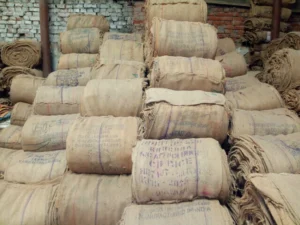
Bardana vs Synthetic Bags — Full Comparison
1. 🌬️ Breathability — Winner: Bardana Jute Bags
One of the most important factors for grain storage is air circulation. Grain is a living, breathing commodity. If moisture builds up inside the bag, it leads to:
- Fungal growth and mould
- Grain rotting from inside
- Aflatoxin contamination
- Heavy financial losses
Bardana jute bags are naturally breathable. The open weave of jute fibre allows air to circulate freely, keeping moisture levels in check and grain fresh for longer periods.
Synthetic HDPE bags trap moisture inside. This creates a humid microenvironment that accelerates grain spoilage, especially during monsoon season.
✅ For grain storage — jute gunny bags win clearly on breathability.
2. 💪 Strength & Durability — Winner: Bardana Jute Bags
Jute gunny bags are designed to carry heavy loads — typically 50 kg to 100 kg — without tearing or bursting. The natural fibre provides excellent tensile strength and handles rough loading and unloading at mandis without damage.
Synthetic bags can tear suddenly under pressure. A single crack or small hole in a polypropylene bag can cause the entire seam to split, leading to grain spillage during transport.
✅ For heavy-duty grain handling — bardana jute sacks are stronger and more reliable.
3. 🌿 Eco-Friendliness — Winner: Bardana Jute Bags (No Contest)
This is where jute wins by a massive margin.
Bardana jute bags are:
- 100% biodegradable — decompose naturally within months
- Made from a renewable plant source
- Carbon neutral in production
- Safe for soil when disposed
- Reusable multiple times before disposal
Synthetic/plastic bags are:
- Non-biodegradable — survive in soil for 500+ years
- Made from petroleum — a non-renewable resource
- Responsible for microplastic pollution in soil and water
- Banned or restricted in many Indian states
The Government of India mandates jute packaging for foodgrains and sugar under the Jute Packaging Materials (Compulsory Use in Packing Commodities) Act, 1987. This law exists precisely because jute is safer and more sustainable for food grain packaging.
✅ For environment and legal compliance — jute gunny bags are the only responsible choice.
4. 💰 Cost — Winner: Synthetic Bags (Short Term Only)
We will be honest here. Synthetic bags are cheaper to buy initially. A basic HDPE bag costs less per unit than a new jute gunny bag.
However, consider the true cost:
- Jute bags are reusable 3 to 5 times, reducing per-use cost significantly
- Old bardana bags are available at very low prices from suppliers like Chotelal & Sons — making jute even more affordable
- Grain spoilage caused by synthetic bags can cost far more than the savings on bag price
- Disposal of plastic bags adds hidden environmental and regulatory costs
✅ For long-term value — bardana jute bags are more economical when reuse and grain protection are factored in.
5. 🏛️ Government & FCI Compliance — Winner: Bardana Jute Bags
If you supply grain to government agencies, FCI (Food Corporation of India), or state procurement bodies, you must use jute bags. Synthetic bags are not accepted for government grain procurement.
Farmers and traders who use jute gunny bags for government sale avoid rejection at procurement centres and get faster payment clearance.
✅ For government grain procurement — jute bags are mandatory.
6. 🌡️ Temperature Regulation — Winner: Bardana Jute Bags
Jute is a natural insulator. It helps maintain a stable temperature inside the bag, protecting grain from extreme heat in summers and cold in winters.
Plastic bags absorb heat and can create condensation inside, leading to moisture damage — especially in the hot climate of states like Haryana, Punjab, and Uttar Pradesh.
✅ For year-round storage in Indian climate — jute gunny bags perform better.
Quick Comparison Table
| Feature | Bardana Jute Bags | Synthetic HDPE Bags |
|---|---|---|
| Breathability | ✅ Excellent | ❌ Poor |
| Strength | ✅ High | ⚠️ Medium |
| Eco-friendly | ✅ 100% Biodegradable | ❌ Non-biodegradable |
| Reusability | ✅ 3–5 times | ⚠️ Limited |
| Cost (per use) | ✅ Low | ⚠️ Low upfront only |
| Govt. Compliance | ✅ Mandatory | ❌ Not accepted |
| Temperature Control | ✅ Natural insulation | ❌ Heat absorbing |
| Grain Safety | ✅ Proven safe | ❌ Risk of moisture |
| Availability | ✅ New & used bardana | ✅ Widely available |
Why Old/Used Bardana Bags Are Still a Smart Choice
Many small farmers and grain traders ask us about old bardana bags. Here is our honest answer:
Used jute gunny bags are an excellent option for:
- Short-term storage (1 to 3 months)
- Local mandi transportation
- Budget-conscious buyers
- Small-quantity grain storage
At Chotelal & Sons, Ambala City, we supply both new and old bardana bags in bulk quantities. Our used bardana is carefully sorted for quality — we only supply bags that are clean, strong, and free from major damage.
Where to Buy Quality Bardana Bags in Haryana?
If you are looking for a trusted bardana bag supplier in Haryana, Chotelal & Sons has been serving grain traders, mill owners, farmers, and warehouse businesses since 1974.
We supply:
- New jute gunny bags (all sizes)
- Old/used bardana bags in bulk
- Jute sacks for wheat, rice, paddy, sugar, flour
- Pan-India delivery available
- Wholesale and bulk orders welcome
📞 Call/WhatsApp us for bulk pricing and availability 🌐 Visit: jutegunnybags.com 📍 Location: Ambala City, Haryana, India
Conclusion
The verdict is clear. Bardana jute bags are superior to synthetic bags for grain storage in almost every important parameter — breathability, strength, eco-friendliness, government compliance, and long-term value.
Synthetic bags may look cheaper on the surface, but when you factor in grain spoilage risk, environmental damage, legal restrictions, and reusability — jute gunny bags are the smarter, safer and more profitable choice for every serious grain business in India.
Make the switch to quality bardana today. Your grain — and your profits — will thank you.
Published by Chotelal & Sons — Bardana Bags & Jute Gunny Bags Supplier, Ambala City, Haryana | Est. 1974