

Bardana is a commonly used term in India for bags or sacks used to store, pack, transport, and handle agricultural commodities such as wheat, rice, pulses, grains, seeds, sugar, flour, and other bulk materials. Depending on the material, bardana can be made from jute, plastic, PP (polypropylene), HDPE, or other woven materials.
For farmers, traders, wholesalers, manufacturers, and agricultural businesses, choosing the right bardana bags is important for safe storage and transportation.
In this guide, we will explain bardana meaning, bardana in English, types of bardana, jute bardana, plastic bardana, bardana HSN code, bardana business, manufacturing, and commonly asked questions.
What Is Bardana?
Bardana refers to a bag, sack, or packaging material used for storing and transporting agricultural and commercial products.
In India, the word is especially common in the agriculture and grain-trading industry. Wheat, rice, maize, pulses, potatoes, onions, animal feed, and other products are often packed in different types of bardana bags.
The type of bardana required depends on:
- Product being packed
- Required bag capacity
- Storage duration
- Transportation method
- Moisture resistance requirements
- Strength and durability
- Cost of packaging
Bardana Meaning in English
The bardana meaning in English is generally sack, bag, or packaging sack.
There is no single English word that perfectly covers every use of the Hindi/Punjabi term “bardana.” In agricultural and commercial contexts, it is commonly understood as a sack or bag used for packing and transporting goods.
For example:
Bardana = Sack / Bag / Packaging Sack
Bardana Meaning in Hindi
Bardana (बोरदाना/बारदाना) generally refers to अनाज, दाल, चावल, गेहूं और अन्य सामान रखने या ढोने के लिए इस्तेमाल होने वाली बोरी या थैला।
In simple words:
बारदाना क्या होता है?
बारदाना ऐसी बोरी या पैकिंग सामग्री होती है जिसमें अनाज और अन्य सामान को सुरक्षित रखने तथा एक स्थान से दूसरे स्थान तक ले जाने के लिए पैक किया जाता है।
Types of Bardana Bags
There are different types of bardana available in the market. The most common options include jute bardana, plastic bardana, PP bags, and HDPE bags.
1. Jute Bardana
Jute bardana is made from natural jute fibre and has traditionally been used for packing agricultural commodities.
Jute sacks are strong, breathable, reusable, and biodegradable, making them suitable for various agricultural applications.
Common uses include:
- Wheat packaging
- Rice packaging
- Pulses
- Seeds
- Agricultural commodities
- Food-grain storage and transportation
Jute bardana can also be preferred by businesses looking for more sustainable packaging options.
2. Plastic Bardana
Plastic bardana generally refers to sacks made from plastic-based materials such as polypropylene (PP) or HDPE.
Plastic bags are popular because they are lightweight, strong, economical, and available in different sizes and specifications.
They can be used for:
- Rice
- Wheat
- Flour
- Animal feed
- Fertilizers
- Seeds
- Industrial materials
- Other bulk products
3. PP Bardana Bags
PP bardana bags are manufactured from woven polypropylene fabric. They are widely used because of their strength-to-weight ratio and ability to handle bulk materials.
Businesses can choose different sizes, fabric specifications, stitching patterns, and printing options according to their requirements.
4. Used or Old Bardana
Old bardana refers to previously used sacks that may be collected, sorted, cleaned, repaired, and resold depending on their condition.
Businesses dealing in old bardana should inspect the bags carefully for:
- Tears
- Weak stitching
- Moisture damage
- Contamination
- Reduced load-bearing capacity
Bardana Bori: What Does It Mean?
Bardana bori is another common way of referring to a sack or bag used for packaging goods.
In agricultural markets, people may use terms such as bori, sack, bag, or bardana interchangeably depending on the region and application.
The actual specification of the bag—such as material, size, weight, and strength—is more important than the name used locally.
Common Uses of Bardana Bags
Bardana bags are used across agriculture, food processing, manufacturing, and trading industries.
Some common applications include:
- Grain storage
- Wheat packaging
- Rice packaging
- Pulse packaging
- Flour packaging
- Seed storage
- Animal feed packaging
- Agricultural product transportation
- Industrial material packaging
- Wholesale commodity transportation
The correct bag should be selected according to the weight and nature of the product.
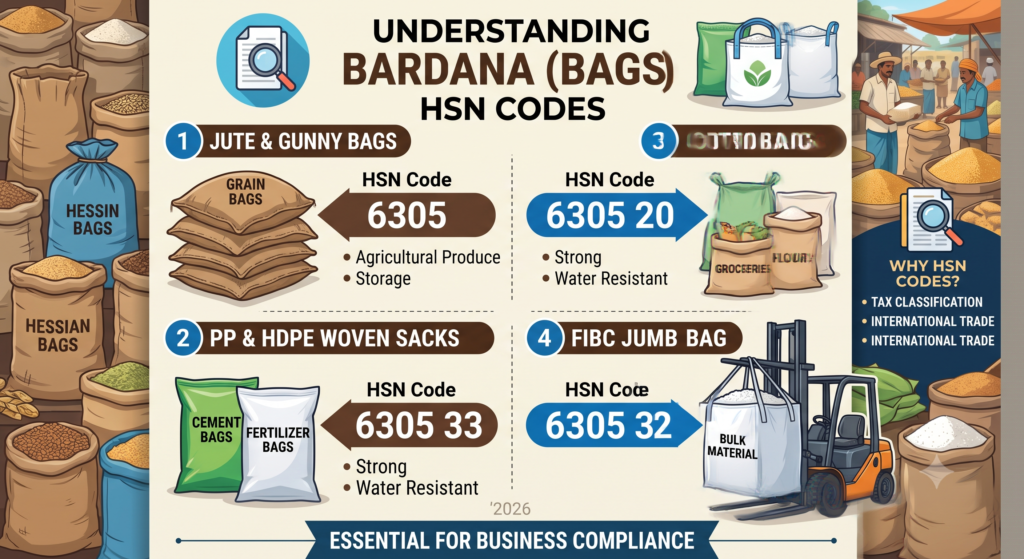
Bardana HSN Code and GST Rate
One of the most searched questions related to bardana is “What is the HSN code for bardana?”
However, there is no single HSN code that should automatically be applied to every bardana product. The correct classification depends on the material and exact nature of the bag—for example, whether it is made from jute, polypropylene, plastic, or another textile material.
Similarly, the applicable GST rate can depend on the product classification and applicable tax rules.
Businesses should therefore verify the HSN classification against the current GST/HSN requirements applicable to their exact product before preparing invoices or filing returns.
For queries such as:
- Bardana HSN code
- HSN code for bardana
- Jute bardana HSN code
- Bardana HSN code and GST rate
- Bardana HSN
it is advisable to confirm the classification based on the actual material, construction, and intended product description.
| HS Code | Description | GST% |
|---|---|---|
| 63051040 | JUTE SACKING BAGS Products Include: Gunny Bags, Used Jute Bags | 12% |
| 630510 | Sacks and bags, for the packing of goods, of jute or other textile bast fibres of heading 5303 | 12% |
| 630590 | Sacks and bags, for the packing of goods, of textile materials (excluding man-made, cotton, jute or other textile bast fibres of heading 5303) | 12% |
| 63051030 | JUTE HESSIAN BAGS | 12% |
| 63051060 | PLASTIC COATED OR PAPER CUM POLYTHENE LINED JUTE BAGS AND SACKS | 12% |
| 63051090 | SACKS AND BAGS OF OTHR THN JUTE OR OF OTHR TXTL BAST FIBRES OF HDG NO.5303 Products Include: Bardana, Laundry Bag | 12% |
Bardana Business in India
The bardana business can be connected with manufacturing, wholesale trading, distribution, recycling, or supplying packaging bags to agricultural and industrial customers.
A bardana business may operate as:
- Manufacturer – Produces bags using appropriate machinery and raw materials.
- Wholesaler – Purchases bags in bulk and supplies them to traders and businesses.
- Distributor – Supplies bardana to retailers, agricultural markets, mills, and other customers.
- Used Bardana Supplier – Collects and supplies reusable bags after appropriate sorting and inspection.
- Custom Bag Supplier – Provides bags with customized sizes, printing, and specifications.
Before starting a bardana business, entrepreneurs should research local demand, raw-material availability, machinery costs, competition, transportation, quality requirements, and customer segments.
Bardana Making Machine and Manufacturing Plant
A bardana manufacturing plant requires suitable machinery depending on the material and type of bag being produced.
For woven plastic/PP bags, the manufacturing process may involve stages such as:
Raw Material → Tape/Fabric Production → Weaving → Cutting → Stitching → Printing → Quality Inspection → Packing
A manufacturing setup can vary significantly in investment depending on production capacity, automation, machinery type, building requirements, electricity, labor, raw materials, and printing facilities.
Anyone planning to establish a bardana manufacturing plant should prepare a detailed project report and calculate machinery, operating, labor, utility, raw-material, maintenance, and distribution costs before investing.
How to Choose the Right Bardana Bags
Before purchasing bardana bags, consider the following factors:
Material
Choose jute, PP, HDPE, or another material according to the product and storage requirements.
Capacity
Select the appropriate bag size and weight capacity for the commodity.
Strength
Check fabric quality, stitching, seams, and overall load-bearing capacity.
Moisture Requirements
For products sensitive to moisture, consider packaging specifications that provide appropriate protection.
Reusability
If the bags will be reused, select a durable product that can withstand repeated handling.
Cost
Compare the total cost, not just the purchase price. A stronger bag may offer better value if it reduces product loss and replacement costs.
Why Quality Bardana Matters
Poor-quality packaging can lead to product loss, contamination, leakage, tearing, and increased transportation problems.
For agricultural businesses, quality bardana can help improve:
- Product handling
- Storage efficiency
- Transportation
- Packaging consistency
- Customer satisfaction
- Operational efficiency
The right packaging should always match the product and intended application.
Frequently Asked Questions About Bardana
1. What is bardana?
Bardana is a commonly used Indian term for sacks or bags used to pack, store, and transport grains, agricultural commodities, and other bulk materials.
2. What is bardana in English?
Bardana in English can generally be translated as sack, bag, or packaging sack, depending on the context.
3. What is bardana meaning in Hindi?
Bardana means a बोरी या पैकिंग बैग used for storing and transporting grains, pulses, and other products.
4. What is plastic bardana?
Plastic bardana refers to sacks manufactured using plastic-based materials such as PP or HDPE. They are commonly used for agricultural and industrial packaging.
5. What is jute bardana?
Jute bardana is a sack made from jute fibre. It is commonly used for packaging and transporting agricultural commodities.
6. What is bardana bori?
Bardana bori is a commonly used term for a sack or bag used to store and transport commodities such as grains, pulses, and other bulk products.
7. What is the HSN code for bardana?
The applicable HSN code depends on the material and exact classification of the bag. Jute, plastic, PP, and other bags may fall under different classifications, so businesses should verify the current HSN classification for their specific product.
8. Is bardana business profitable?
Bardana can be a viable business because agricultural and industrial sectors continuously require packaging. Profitability depends on product quality, purchase cost, production efficiency, market demand, competition, transportation, and customer relationships.
9. Can I start a bardana manufacturing business?
Yes. A bardana manufacturing business can be established at different scales depending on the type of bags being produced. Before starting, assess machinery requirements, raw materials, production capacity, labor, investment, and market demand.
10. Where can I buy old bardana?
Old bardana can be sourced from used-bag traders, commodity markets, recyclers, and suppliers dealing in reusable packaging. Always inspect used bags for damage, contamination, and structural strength before purchasing.
Conclusion
Bardana plays an important role in India’s agricultural and packaging ecosystem. From traditional jute bardana to modern plastic and PP bardana bags, different types of sacks are available for different products and applications.
Whether you are a farmer, grain trader, wholesaler, manufacturer, or entrepreneur planning to start a bardana business, understanding the material, size, strength, application, and packaging requirements can help you select the right product.
For businesses researching bardana bags, jute bardana, plastic bardana, bardana HSN code, bardana manufacturing, bardana business, or old bardana suppliers, it is important to compare quality, specifications, pricing, and applicable regulatory requirements before making a purchase or investment.
| HS Code | Description | GST% |
|---|---|---|
| 63051040 | JUTE SACKING BAGS Products Include: Gunny Bags, Used Jute Bags | 12% |
| 630510 | Sacks and bags, for the packing of goods, of jute or other textile bast fibres of heading 5303 | 12% |
| 630590 | Sacks and bags, for the packing of goods, of textile materials (excluding man-made, cotton, jute or other textile bast fibres of heading 5303) | 12% |
| 63051030 | JUTE HESSIAN BAGS | 12% |
| 63051060 | PLASTIC COATED OR PAPER CUM POLYTHENE LINED JUTE BAGS AND SACKS | 12% |
| 63051090 | SACKS AND BAGS OF OTHR THN JUTE OR OF OTHR TXTL BAST FIBRES OF HDG NO.5303 Products Include: Bardana, Laundry Bag | 12% |