
Largest Jute Producing States in India
India is one of the world’s largest producers of jute and plays a significant role in supplying high-quality natural fibre to domestic and international markets. The country’s favorable climate, fertile alluvial soil, and abundant rainfall make eastern and northeastern states ideal for cultivating jute.
If you’re wondering which state is the largest producer of jute in India, or looking for information about the jute industry in India, this comprehensive guide covers everything you need to know.
What is Jute?
Jute is a natural vegetable fibre obtained from the stem of plants belonging to the Corchorus species. Known as the Golden Fibre, jute is biodegradable, recyclable, durable, and environmentally friendly.
It is widely used for manufacturing:
- Jute bags
- Shopping bags
- Gunny sacks
- Ropes
- Mats
- Carpets
- Home décor products
- Packaging materials
- Fashion accessories
As sustainability becomes increasingly important worldwide, the demand for jute in India and global markets continues to grow.
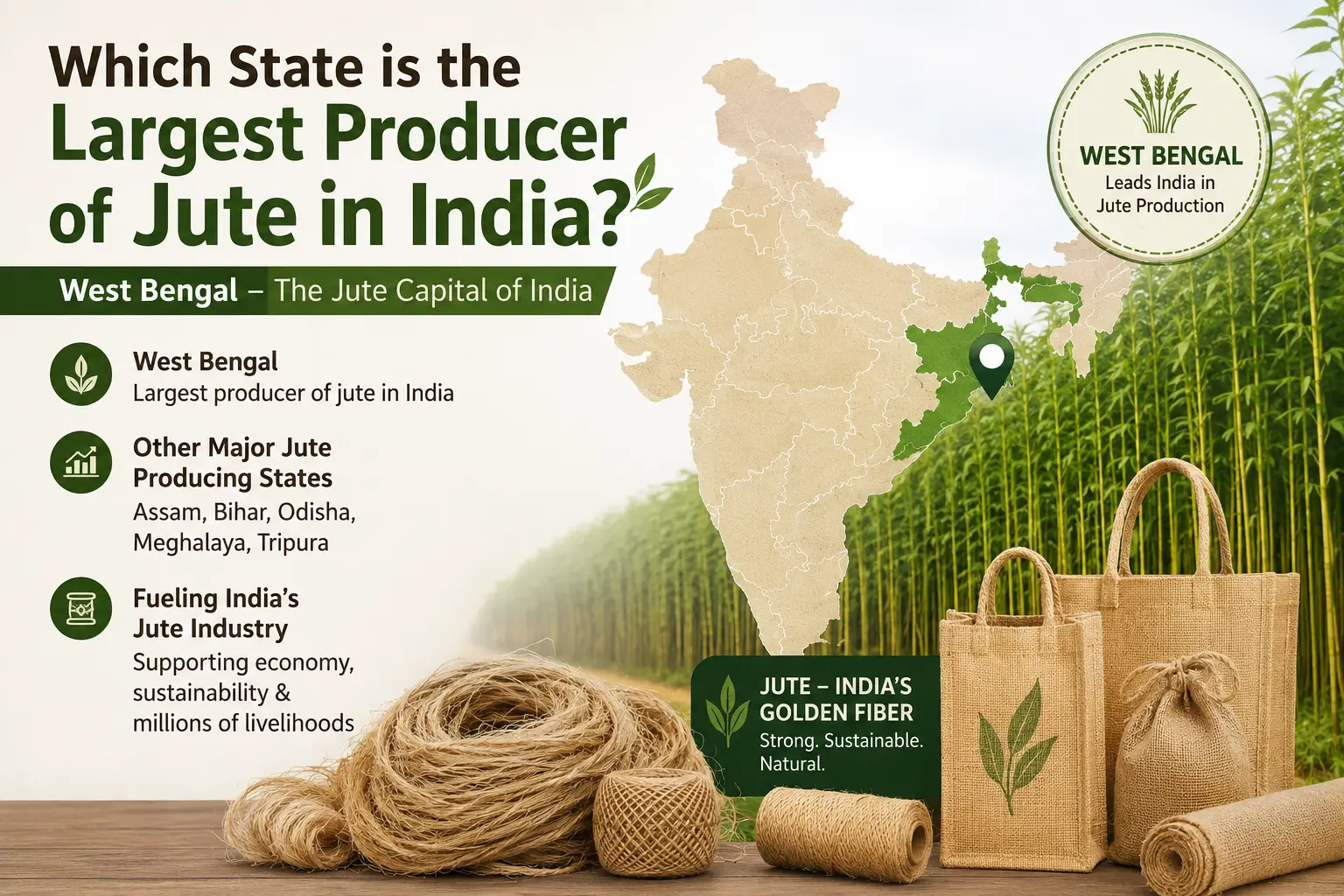
Which State is the Largest Producer of Jute in India?
The answer is West Bengal.
West Bengal is the Largest Jute Producing States in India and contributes approximately 70–75% of the country’s total jute production. The state has ideal geographical conditions, including fertile alluvial soil deposited by the Ganga River system and high annual rainfall.
Why West Bengal Leads in Jute Production
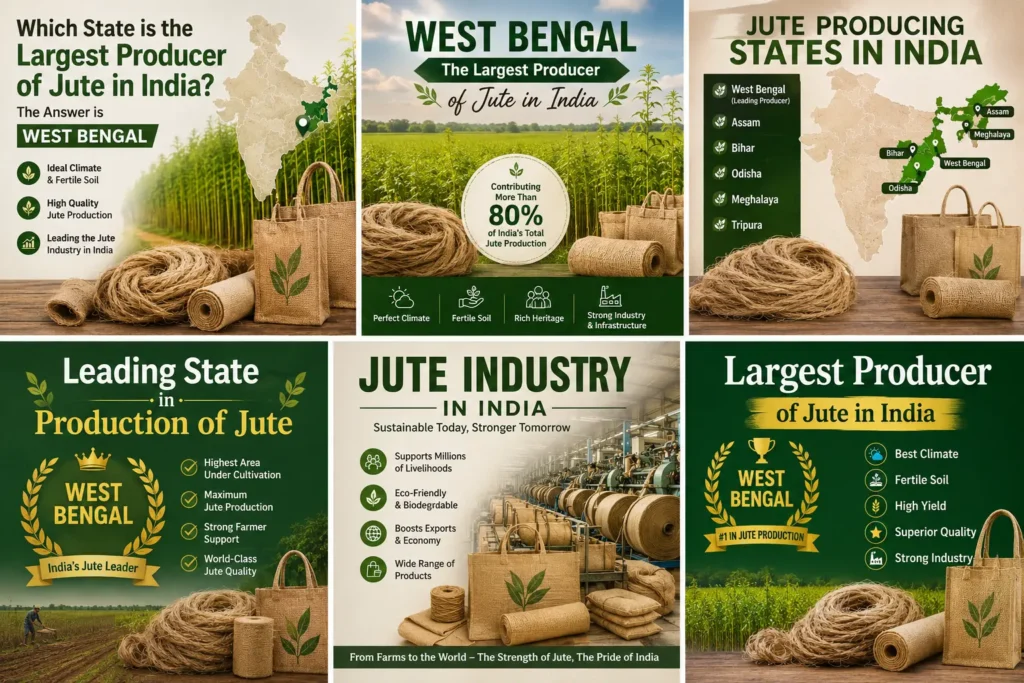
Several factors make West Bengal the leading state in production of jute:
- Rich alluvial soil
- Warm and humid climate
- Adequate rainfall
- Extensive river network
- Skilled farming communities
- Strong transportation infrastructure
- Presence of numerous jute mills
Because of these advantages, West Bengal remains the leading producer of jute in India year after year.
Jute Producing States in India
The following states are the major contributors to jute production in India.
| Rank | Jute Producing State in India | Contribution |
|---|---|---|
| 1 | West Bengal | Highest Producer |
| 2 | Bihar | Major Producer |
| 3 | Assam | Significant Producer |
| 4 | Meghalaya | Moderate Producer |
| 5 | Odisha | Growing Producer |
| 6 | Tripura | Regional Producer |
| 7 | Uttar Pradesh | Limited Production |
| 8 | Andhra Pradesh | Small Scale Production |
Let’s understand each jute producing state in detail.
1. West Bengal – Major jute producing states in India
West Bengal dominates jute production in India due to its highly favorable agro-climatic conditions.
Major Jute Growing Districts
- North 24 Parganas
- Nadia
- Murshidabad
- Hooghly
- Cooch Behar
- Jalpaiguri
The state is also home to the largest concentration of jute mills, making it the center of the jute industry in India.
2. Bihar rank in ute production
Bihar is another major producer of jute in India.
The districts located along river basins provide suitable conditions for cultivation.
Important districts include:
- Katihar
- Purnia
- Kishanganj
- Araria
Farmers in Bihar increasingly cultivate jute because of growing demand for eco-friendly packaging materials.
3. Assam
Assam contributes significantly to the country’s jute production.
The Brahmaputra valley provides:
- Fertile soil
- Heavy rainfall
- Warm temperatures
These conditions support excellent jute cultivation.
4. Meghalaya
Although smaller in production compared to West Bengal and Bihar, Meghalaya is an important jute producing state.
Its humid climate supports quality fibre production.
5. Odisha
Odisha has gradually expanded its jute cultivation.
Major producing districts include:
- Kendrapara
- Balasore
- Jajpur
The state contributes steadily to jute production in India.
6. Tripura
Tripura’s climatic conditions allow farmers to cultivate quality jute, especially in lowland regions.
7. Uttar Pradesh
Some eastern districts of Uttar Pradesh cultivate jute on a limited scale, mainly near river plains.
8. Andhra Pradesh
Although not traditionally known for jute farming, certain regions in Andhra Pradesh have started cultivating jute under suitable irrigation conditions.
Why is West Bengal the Leading Producer of Jute in India?
Several geographical and economic factors explain why West Bengal remains the leading state in production of jute.
Favorable Climate
Jute grows best in temperatures between 24°C and 35°C.
West Bengal experiences warm, humid weather throughout the growing season.
Rich Alluvial Soil
The Ganga delta provides fertile alluvial soil that promotes healthy plant growth.
High Rainfall
Annual rainfall between 150 cm and 200 cm is ideal for jute cultivation.
Strong Jute Industry
The presence of numerous processing mills ensures farmers have easy access to buyers.
Skilled Workforce
Generations of experience in jute farming have helped improve productivity.
Jute Production in India
India is among the world’s top producers of raw jute.
The crop is mainly grown during the Kharif season, with sowing beginning before the onset of the monsoon.
Jute Production Process
- Land preparation
- Seed sowing
- Crop growth
- Harvesting
- Retting (water soaking)
- Fibre extraction
- Washing
- Drying
- Grading
- Transportation to mills
The extracted fibre is then processed into various products.
Jute Industry in India
The jute industry in India is one of the country’s oldest agro-based industries.
It supports millions of people through:
- Farming
- Transportation
- Manufacturing
- Export
- Packaging
- Retail
The industry plays a vital role in rural employment, particularly in eastern India.
Major Products Manufactured by the Jute Industry
The modern jute industry produces a wide range of products, including:
- Shopping bags
- Grocery bags
- Gift bags
- Gunny bags
- Packaging sacks
- Home décor
- Floor coverings
- Decorative baskets
- Office accessories
- Storage solutions
- Fashion bags
- Promotional bags
Today, many businesses are shifting from plastic packaging to jute products because of environmental concerns.
Importance of Jute in India
Jute contributes significantly to India’s economy.
Some key benefits include:
Eco-Friendly
Jute is biodegradable and compostable.
Sustainable
It is a renewable natural fibre with low environmental impact.
Employment Generation
Millions of farmers and workers depend on the jute sector.
Export Earnings
India exports jute products to many countries worldwide.
Supports Green Packaging
Governments and businesses increasingly prefer sustainable alternatives to plastic.
Factors Affecting Jute Production in India
Several factors influence jute production in India:
- Rainfall
- Soil fertility
- Temperature
- Water availability
- Quality seeds
- Farming techniques
- Government policies
- Market demand
Improving these factors helps increase productivity and fibre quality.
Challenges Faced by the Jute Industry in India
Despite its importance, the jute industry in India faces several challenges.
These include:
- Competition from synthetic packaging materials
- Climate variability
- Rising production costs
- Aging manufacturing infrastructure
- Price fluctuations
- Labour shortages in some regions
However, growing awareness of sustainable packaging continues to create new opportunities for the industry.
Future of Jute Production in India
The future of jute in India looks promising.
Increasing restrictions on single-use plastics, rising environmental awareness, and growing demand for biodegradable packaging are driving renewed interest in jute products.
Government initiatives supporting natural fibres and sustainable agriculture are also expected to strengthen the sector in the coming years.
Frequently Asked Questions (FAQs)
Which state is the largest producer of jute in India?
West Bengal is the largest producer of jute in India, contributing around 70–75% of the country’s total production.
Which is the leading producer of jute in India?
West Bengal is the leading producer of jute in India due to its ideal climate, fertile alluvial soil, and well-established jute mills.
What are the major jute producing states in India?
The main jute producing states in India are:
- West Bengal
- Bihar
- Assam
- Meghalaya
- Odisha
- Tripura
- Uttar Pradesh
- Andhra Pradesh
Why is West Bengal famous for jute production?
West Bengal has fertile alluvial soil, abundant rainfall, humid weather, skilled farmers, and a strong industrial ecosystem, making it the leading state in production of jute.
What is the importance of the jute industry in India?
The jute industry in India supports millions of livelihoods, promotes eco-friendly packaging, generates export revenue, and contributes significantly to rural economic development.
Conclusion
When discussing jute producing states in India, West Bengal stands out as the undisputed leader. Its favorable climate, fertile river plains, and extensive network of jute mills make it the largest producer of jute in India. Other states such as Bihar, Assam, Meghalaya, Odisha, and Tripura also contribute significantly to jute production in India.
With rising global demand for sustainable packaging and biodegradable materials, the jute industry in India is well-positioned for continued growth. As businesses and consumers increasingly adopt eco-friendly alternatives, jute will remain one of India’s most valuable natural fibres.