
Introduction
India loses an estimated ₹92,000 crore worth of food grain every year due to post-harvest losses. That is grain that was successfully grown, harvested, and transported — but then damaged or destroyed before it could be eaten or sold.
For individual farmers, post-harvest losses can mean the difference between profit and debt. A damaged bag, a leaky storage shed, or wrong packaging can wipe out an entire season’s hard work overnight.
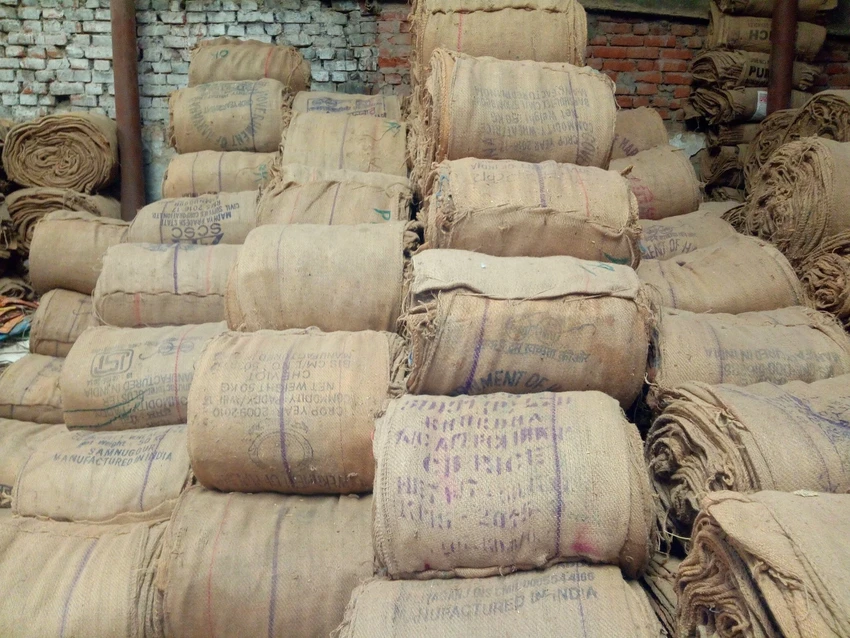
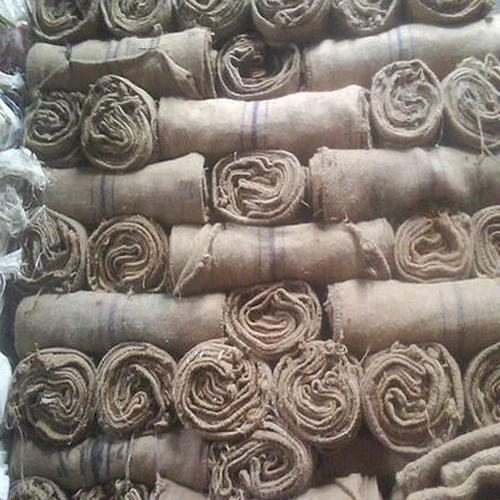
One of the simplest, most proven solutions available to every farmer in India is one that has existed for centuries: the bardana jute bag.
At Chotelal & Sons, we have supplied jute gunny bags to farmers and agricultural businesses across Haryana and North India since 1974. In this blog, we explain exactly how the right jute bag protects your grain — and your income.
What Are Post-Harvest Losses?
Post-harvest losses refer to the quantity and quality of food that is lost or wasted between the time of harvest and the time of consumption. In India, post-harvest losses are particularly high for:
- Wheat — 4.65% average loss
- Rice — 5.16% average loss
- Pulses — up to 10% loss in some regions
- Fruits and vegetables — up to 30% loss
For grain stored in bags, the primary causes of loss are:
- Moisture damage — grain absorbs humidity and develops mould or fungus
- Pest infestation — weevils, beetles, and rodents damage bagged grain
- Physical damage — torn or burst bags during handling and transport
- Temperature fluctuation — extreme heat or cold damages grain quality
- Contamination — chemical or biological contamination from improper packaging
How Bardana Jute Bags Protect Grain at Every Stage
Stage 1: At the Threshing Floor
Immediately after harvesting, grain contains residual moisture from the plant. It needs packaging that allows this moisture to escape naturally while keeping the grain clean and protected from dust and dirt.
Jute gunny bags are the ideal container at this stage. Their natural open weave allows moisture vapour to escape, preventing the grain from sweating and developing mould during the critical first hours and days after harvest.
Plastic or synthetic bags would trap this moisture inside — creating immediate conditions for fungal growth even before the grain reaches the warehouse.
Stage 2: During Transport to Mandi
The journey from farm to mandi is rough. Bags are stacked on tractors, thrown onto truck beds, and handled by many pairs of hands. The packaging must withstand this physical stress without tearing.
New jute gunny bags have excellent tensile strength — they flex with the grain inside without cracking. The natural fibre absorbs shock rather than transmitting it to the grain.
Synthetic bags, by contrast, can develop hairline cracks under repeated flexing that suddenly burst under load — causing spillage on the road and significant grain loss.
Stage 3: Short-Term Storage at Home or in Village
Many small farmers store grain at home or in village storage facilities for weeks to months before selling — waiting for better prices or household consumption. During this period, grain faces:
- Monsoon humidity — especially dangerous in July to September
- Temperature swings — hot days and cool nights create condensation
- Pest pressure — weevils and rodents are most active in stored grain
Bardana jute bags help on all three fronts:
- Natural breathability prevents condensation inside the bag
- Jute fibre’s slight insulating property reduces temperature swings
- Properly tied jute bags are harder for rodents to chew through than thin plastic
Stage 4: Long-Term Storage in Warehouses
For grain stored in professional warehouses for 3 months to 1 year, new jute gunny bags are the gold standard. Properly stored jute-bagged grain maintains:
- Lower moisture content than plastic-bagged grain
- Better colour and aroma (especially for basmati rice)
- Lower incidence of fungal contamination
- Better germination rates for seed grain
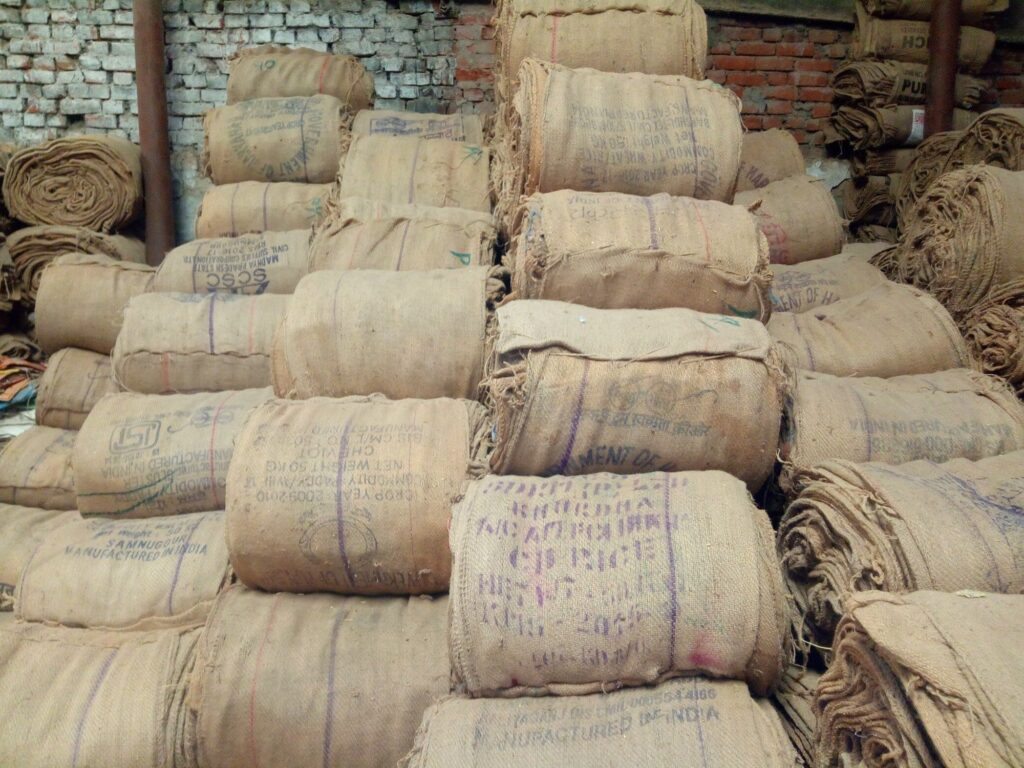
The FCI and state warehousing corporations mandate jute bags specifically because decades of data show lower post-harvest losses with jute than with synthetic alternatives.
Real Numbers — How Jute Bags Save Farmer Income
Let us do a simple calculation for a small farmer storing 100 quintals (10,000 kg) of wheat:
| Factor | Jute Bags | Synthetic Bags |
|---|---|---|
| Storage duration | 4 months | 4 months |
| Moisture loss | ~1% | ~3% |
| Mould damage | Minimal | ~2% |
| Pest damage | ~0.5% | ~0.5% |
| Total loss | ~1.5% | ~5.5% |
| Grain saved | 9,850 kg | 9,450 kg |
| At ₹2,200/quintal | ₹2,16,700 | ₹2,07,900 |
| Difference | ₹8,800 saved |
On just 100 quintals stored for 4 months, using jute bags instead of synthetic bags can save a farmer approximately ₹8,000 to ₹10,000 — more than enough to cover the cost of the bags themselves many times over.
Government Support for Jute Bag Usage by Farmers
The Indian government actively supports jute bag usage by farmers through:
- Mandatory jute packaging for all government grain procurement
- MSP procurement only accepting grain in standard jute bags
- PM Fasal Bima Yojana guidelines recommending proper jute bag storage
- NABARD-linked warehouse receipt financing that values jute-bagged grain higher due to better quality preservation
Farmers who store their grain properly in bardana jute bags are more likely to access these government schemes and get better prices.
How to Get the Best Bardana Bags for Your Farm
At Chotelal & Sons, we supply affordable, quality bardana bags to farmers across Haryana, Punjab, Himachal Pradesh, and Uttarakhand. Whether you need:
- New jute gunny bags for government sales and long-term storage
- Old/used bardana bags for short-term storage and local mandi sales
- Bulk orders for farmer groups and cooperatives
We have served India’s agricultural community for over 50 years and understand exactly what farmers need.
📞 WhatsApp or Call for farm-friendly pricing 🌐 jutegunnybags.com 📍 Ambala City, Haryana, India
Conclusion
Post-harvest losses are not inevitable. With the right packaging — specifically, quality bardana jute bags — farmers can protect a significant portion of grain that would otherwise be lost to moisture, pests, and physical damage.
The investment in good jute gunny bags pays back many times over in preserved grain quality and better selling prices. It is one of the simplest and most impactful decisions any farmer or grain trader can make.
Protect your harvest. Choose bardana jute bags from Chotelal & Sons — India’s trusted bardana supplier since 1974.